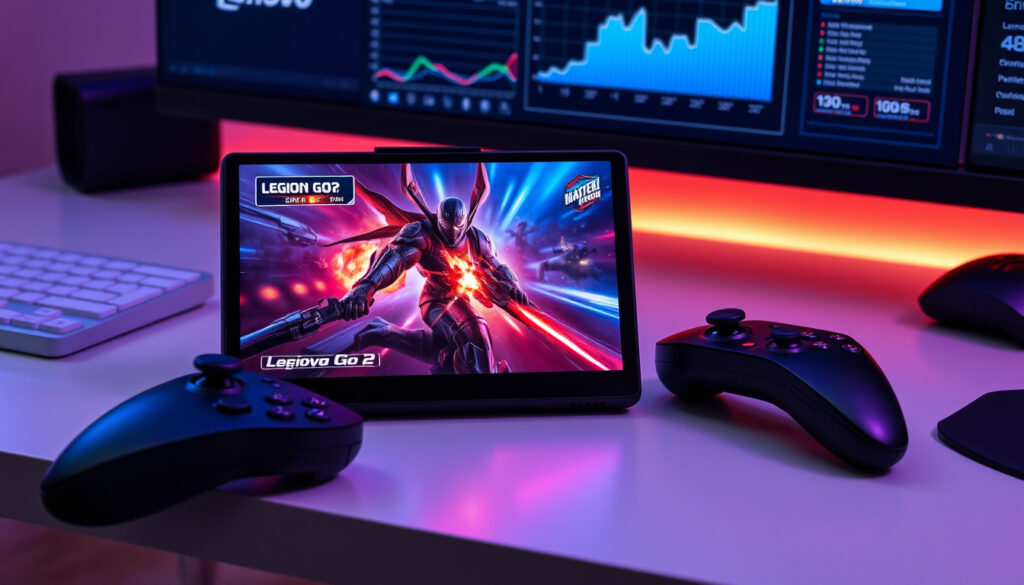
Lenovo Legion Go 2 – Neue Portable Gaming-Konsole Im Test
Lenovo has officially confirmed the development of the Legion Go 2, marking a significant milestone in the evolution of portable gaming devices. Building upon the foundation established by its predecessor, the original Legion Go, this next-generation handheld promises substantial improvements in performance, display technology, and overall user experience. As competition in the handheld gaming market intensifies, with devices like the Steam Deck and ASUS ROG Ally already capturing consumer attention, the Legion Go 2 emerges as a compelling option for gamers seeking powerful specifications in a portable form factor.
The gaming handheld segment has experienced remarkable growth over the past several years, driven by advances in mobile processing power and shifting consumer preferences toward flexible gaming experiences. Lenovo recognizes this momentum and appears committed to establishing a stronger presence in this competitive landscape. Industry analysts suggest the company aims to differentiate the Legion Go 2 through superior build quality, innovative cooling solutions, and seamless integration with existing gaming ecosystems.
Key Specifications and Hardware Overview
Early specifications suggest the Legion Go 2 will feature AMD’s advanced processor technology, positioning the device as a formidable contender in its category. The partnership between Lenovo and AMD has yielded impressive results, with the original Legion Go receiving commendation for its performance capabilities. The successor is expected to build upon this foundation with enhanced graphical processing and improved energy efficiency.
Display technology represents a primary focus area for the new device. Reports indicate the inclusion of a high-refresh-rate screen that should deliver smooth visuals during fast-paced gaming sessions. The original Legion Go featured an 8-inch display, and the successor may incorporate a slightly larger screen or improved resolution to enhance immersion. These display improvements align with industry trends favoring richer visual experiences on portable devices.
Design Philosophy and Ergonomic Improvements
Lenovo has historically prioritized ergonomic design in its gaming products, and the Legion Go 2 is expected to continue this tradition. The original model introduced removable controllers that many users found innovative, and the second generation may refine this concept further. Attention to weight distribution, button placement, and overall comfort during extended gaming sessions will likely receive significant engineering focus.
Thermal management presents particular challenges in compact gaming devices. The Legion Go 2 is rumored to incorporate advanced cooling technology that maintains optimal performance without generating excessive heat or fan noise. This balance between performance and thermal efficiency often determines the success of handheld gaming devices, and early indicators suggest Lenovo has made meaningful progress in this area.
Software Ecosystem and Gaming Compatibility
The Legion Go 2 will almost certainly operate on Windows, providing compatibility with the extensive library of PC games already available to consumers. This platform choice offers advantages in software flexibility and game library access, though it also presents challenges in optimizing the interface for touchscreen interaction and controller input.
Integration with popular gaming platforms remains crucial for market success. The device’s compatibility with services like Steam, Epic Games Store, and Xbox Cloud Gaming will influence purchasing decisions among consumers. Gamers increasingly expect seamless transitions between desktop and portable gaming experiences, and the Legion Go 2 must address these expectations effectively.
Comparison with Competing Devices
| Feature | Lenovo Legion Go 2 | Steam Deck OLED | ASUS ROG Ally |
|---|---|---|---|
| Processor | AMD Ryzen Z2 (Expected) | AMD custom APU | AMD Ryzen Z1 Extreme |
| Display | High refresh rate (TBD) | 7.4″ OLED 90Hz | 7″ IPS 120Hz |
| Battery Life | Estimated 6-8 hours | 2-8 hours | 2-4 hours |
| Storage Options | TBD | 512GB/1TB | 512GB |
| Platform | Windows | SteamOS/Linux | Windows |
While complete specifications for the Legion Go 2 remain unconfirmed, early information suggests competitive positioning against established alternatives. The comparison above reflects announced specifications from competing devices and preliminary expectations for the Lenovo offering.
Expected Release Timeline and Pricing Strategy
Industry sources indicate the Legion Go 2 is likely to arrive in late 2025 or early 2026, though official release dates have not been announced. Lenovo typically follows an annual or semi-annual refresh cycle for its gaming products, making this timeline consistent with established patterns. The company has not confirmed specific availability dates, and consumers should expect announcements closer to launch.
Pricing strategy will significantly influence market reception. The original Legion Go launched at a premium position relative to some competitors, and the successor may maintain similar positioning. However, increasing competition and evolving market conditions could prompt adjustments. Gamers seeking powerful portable experiences should monitor official announcements for confirmed pricing information.
Market Positioning and Target Audience
The Legion Go 2 appears designed to appeal to serious gamers who prioritize performance over ultra-portability. This positioning distinguishes the device from dedicated handheld gaming devices that may sacrifice power for size. The target audience likely includes PC gamers seeking portable alternatives, frequent travelers wanting robust gaming capabilities, and enthusiasts who appreciate premium build quality.
Regional availability will play a crucial role in market success. The original Legion Go experienced limited availability in certain markets, and the sequel may address these distribution challenges. Expansion into additional regions could significantly impact overall sales figures and brand awareness in the gaming handheld segment.
Performance Expectations and Gaming Capabilities
Equipped with advanced AMD processing technology, the Legion Go 2 should handle demanding titles at playable frame rates. The original device demonstrated capability with modern games when settings were appropriately adjusted, and the successor should improve upon this baseline. Technical reviews and gaming benchmarks will ultimately validate real-world performance capabilities.
Resolution scaling and graphics settings optimization remain important considerations for handheld gaming. The ability to adjust visual fidelity for desired frame rates or extended battery life provides flexibility that serious gamers value. The Legion Go 2 is expected to offer intuitive controls for managing these settings within the Windows environment.
Expert Perspectives on the Gaming Handheld Market
Industry analysts view the gaming handheld market as increasingly viable, driven by generational shifts in gaming preferences and technological improvements that enable desktop-class performance in portable form factors. The success of Steam Deck validated consumer interest in powerful handheld devices, and subsequent entries from major manufacturers confirm the segment’s commercial potential.
Integration between handheld devices and cloud gaming services represents a significant development opportunity. As streaming technology improves and game libraries expand, portable devices serve as natural conduits for cloud gaming experiences. The Legion Go 2’s compatibility with these services could prove strategically important as the gaming industry continues evolving.
Long-Term Viability and Support Considerations
Software support and ecosystem longevity influence purchasing decisions for gaming hardware. Consumers increasingly consider update frequency, peripheral compatibility, and manufacturer commitment when investing in gaming devices. Lenovo’s track record with the original Legion Go provides some indication of expected support levels, though formal commitments for the successor remain forthcoming.
Backward compatibility and game library preservation ensure investments in gaming hardware retain value over time. The Windows platform provides advantages in this regard, as the vast majority of PC games remain accessible regardless of release date. Gamers investing in the Legion Go 2 can expect continued access to their existing game libraries without compatibility concerns.
Summary and Market Outlook
The Lenovo Legion Go 2 represents an important development in the gaming handheld market, bringing anticipated performance improvements and refined design to consumers seeking portable gaming solutions. While official specifications remain limited, available information suggests a device competitive with existing alternatives and potentially offering unique advantages in build quality and ergonomic design.
The gaming handheld market continues maturing, with major manufacturers recognizing consumer demand for powerful portable experiences. The Legion Go 2 enters a landscape with proven market interest and established competitors, requiring differentiation through hardware quality, software optimization, and overall value proposition. Gamers awaiting the device should monitor official announcements for confirmed specifications, pricing, and availability information.
Frequently Asked Questions
When will the Lenovo Legion Go 2 be released?
Official release dates have not been confirmed. Industry sources suggest a timeline in late 2025 or early 2026, though this remains unverified until Lenovo makes formal announcements.
What processor will the Legion Go 2 use?
Reports indicate the device will feature AMD’s Ryzen Z2 processor. Official specifications have not been released, so consumers should await confirmation from Lenovo.
How much will the Legion Go 2 cost?
Pricing information has not been announced. The original Legion Go launched at premium pricing, and the successor may follow a similar positioning depending on specifications and market conditions.
Will the Legion Go 2 be compatible with Steam games?
The device is expected to run Windows, which provides compatibility with Steam and other PC gaming platforms. Complete software compatibility details will be confirmed closer to launch.
How does the Legion Go 2 compare to the Steam Deck?
Direct comparisons await official specifications. Available information suggests competitive performance capabilities, with differentiation likely occurring in areas like display quality, build design, and software integration.
Will the Legion Go 2 have removable controllers?
The original Legion Go featured removable controllers, and the successor may refine this design. Official information regarding controller design has not been released.
What is the battery life expected for Legion Go 2?
Battery specifications remain unconfirmed. Performance-intensive gaming typically reduces battery life, and estimates for the device suggest 6-8 hours for general use, though actual results will vary based on game intensity and settings.
Weitere verwandte Artikel
 Daniel Brühl: Wohnort, Sprachen, Staatsbürgerschaft & Filme
 Daisy Edgar-Jones: Krankheit, Partner, Filme
 Dexter Sol Ansell: Eltern, Nationalität, Glatze & Rollen (2025)
 Bitcoin Kurs Euro Realtime – Live Chart & Prognose
 Uwe Kockisch ist tot: Schauspieler mit 81 Jahren gestorben
 Nine Perfect Strangers Staffel 2: Start, Folgen, Cast & Drehort
 Malteser Hund: Charakter, Pflege, Kosten & Nachteile
 Dodge Ram: Markentrennung, Historie und wichtigste Fakten